Thursday, January 13, 2011

Modern Religious Experience: Reflection #9: The Incarnation of God

Modern Religious Experience: Reflection #9: The Incarnation of God: "After viewing 'The Nativity Story', analyzing your chosen Christmas carol, and reading Philippians 2:1-7, reflect on the meaning of Christma..."

Christmas is the revelation of God to the world. It commemorates the birth of Jesus of Nazareth, the son of God, to a young couple from Galilee.
Jesus is widely recognized to be the messiah, our savior. Even among the non-believers, he is acknowledged as a good man of many good deeds. A man of great power, yet a greatly humbled man.


Silent night, holy night!
Shepherds quake at the sight
Glories stream from heaven afar
Heavenly hosts sing Alleluia!
Christ, the Saviour is born


This describes the moment upon which the shepherds first see the baby Jesus. Angels were said to have surrounded the baby, and a light bathed him. It describes the majesty of such a baby, the son of God, here on Earth with us.


Mary had to have faith in the Lord for this to work, as she became the subject of many accusations. Joseph also had to put his faith in God, both to protect and believe Mary. The shepherds and astrologists just had to put their faith in a higher power, and hope it actually meant something.


Coming to Earth as a child shows us that God isn't as out of reach as perhaps we may have thought before. He walks among us, humbly as one of us. Instead of seizing, he seeks to simply help. Perhaps he simply wanted to understand us on our own terms, or to put a friendly face on his healing work.


We also associate babies and birth as beautiful, innocent things. Just maybe, God played on that image to win us over.

Modern Religious Experience: Personal Commemoration- Reflection #7

Modern Religious Experience: Personal Commemoration- Reflection #7: "Think of an event in your life- past, present or future. You are going to create a commemorative ritual for this event. First, describe the ..."

December 17th 2009 will forever be a memorable time in my life. There were many long years filled with countless events that built up to it, but when taken individually these things are insignificant. It is the outcome fueled by the collective that will hold the most significance to me.
It was the day I left my father and my home of almost 15 years for the first time. The day I would live with my mother for the first time, who I had seen increasingly less of as I grew older. Over the years our relationship became strained; he had his life, and I had mine. We barely interacted, and when we did it was only to clash horns. At the time I blamed him for many things, as did he with me. Eventually I became so independent that he couldn't raise me anymore, and so my mother agreed to take care of me. The date of the flight to Korea was set on the 17th. I had only just moved to a new town about 3 months before this, and now had to leave another home, school, and many new friends I had made.
It was an emotional experience. I barely knew anything about Korea, living abroad, or even my own mother who I was to live with. It was the first time I ever saw my father break down and cry. Saying goodbye to all my family in England, and leaving just over a week before Christmas.
I still can't decide whether it was a change for the better or the worse. Maybe I never will. As of now I deeply regret ever moving, but for what its worth there was some good that came out of it. Finally seeing my father being open with me for the first time in a while, and seeing a new land and culture from a different perspective than just a visitor. But one thing that both surprised and touched me was the response from the new school I had only just joined and left. My last day was very special, with my uniform covered with marker expressing lots of good luck wishes and goodbyes. One of my friends had made a Facebook group dedicated to me, wishing me all the best on my new life in Korea, with nearly the entire school joining it and contributing to it. Until then I wasn't very confident in myself, but just seeing how much of an impact I had made on that school in such a short time completely changed my perspective on myself.
The "ritual" shall last from dawn on the 17th, when I first left my home for the airport, to dusk on the 18th, when I first set foot outside the airport in Korea. It will be a time of reflection, a time I shall spend completely alone, just like I had done on the flight and how I felt for a long time before and after this event. In hindsight, I could have easily prevented the strain on the relationship with my father, but I was much too proud for that. This will serve to remind me how I am the largest barrier to my own life. And on this day, I shall remember the one phrase my father held so dearly. A quote from Calvin and Hobbes, a comic strip my father adored and from which he gave me my middle name of Calvin. The very last line Calvin ever says to Hobbes before the series ended. The line engraved on the back of my iPod I was given by my father as my last Christmas present on my last week in the UK:
"It's a magical world, Hobbes, ol' buddy. Let's go exploring!"

Modern Religious Experience: Reflection #8 Islam: Two Perspectives

Modern Religious Experience: Reflection #8 Islam: Two Perspectives: "Find where Islamic religious beliefs intersect with current events. Research a Western news source on the story and summarize the artic..."


The 9/11 attacks caused a huge commotion in the international scene. Much of this commotion came from America itself, with many people suspecting the government's involvement. Obama addresses the concerns of the nation, dismissing the rumors surrounding the event.


This time the Iranian president expresses his opinions on America's involvement with the 9/11 attacks, with Obama once again having to defend the governments actions.

Surprisingly, both articles seem to be against Obama, although even more surprising is how the american website seems to have much stronger beliefs. It voices its concerns over the many "mistakes" and "blunders" the government made, and goes so far as to try to "uncover the truth that has been hidden behind a wall of whitewashing." The Islamic piece however is much less opinionated, although there is definitely a slight bias towards Iran.

Wednesday, November 10, 2010


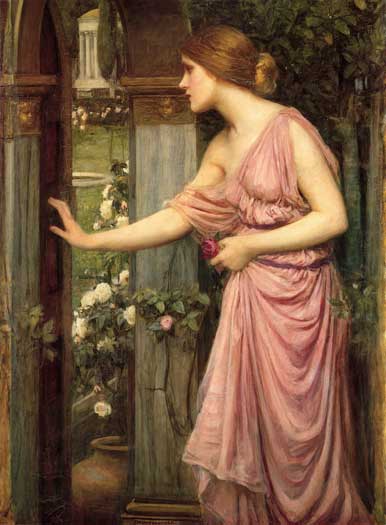
Psyche desires to know who her benevolent yet mysterious host is, fearing it to be a monster of some sort. Upon discovering it is in fact the god Cupid, she stumbles and awakens him. Cupid, hurt by Psyche's lack of faith in him, flees and leaves Psyche. Psyche is given three impossible trials by Aphrodite to atone for her actions, but Cupid helps her along the way.
The story tries to teach us to be faithful, but it also shows us how dangerous curiosity can be.
The Greeks valued faith a whole lot. To them, it was certainly a virtue. One must only look at how much time and resources they devoted to the many gods to see this clearly.

Tuesday, October 19, 2010

Modern Religious Experience: Reflection #5: Bongwonsa Temple and Nature Walk

Modern Religious Experience: Reflection #5: Bongwonsa Temple and Nature Walk: "After visiting the Zen Buddhist Temple, Bongwonsa and attempting to see nature as a Taoist, answer this question: What is it about creation,..."

Karl Marx once said “religion is the opium of the people”. He was right; it soothes us, it dulls our senses to the outside. And in a world of much stress, much change, much conflict, it’s hardly surprising so many indulge in it.
It gives us a reason for why we are here. It gives us rules to follow. It tells us what to think, what to say, how to act. It lets us fit in with others. And in most cases, it gives us a higher being to guide us, to take comfort in, to confide in, to blame, to fear. When something goes wrong, no one likes to take all the responsibility for it. No one likes to think it was all their fault, that there is no atonement. For many, religion is an easy convenience. The peoples’ opium.
To look at it another way, religion is the expression of a society. Thus, no society is without religion. The more complex a society, the more complex the religious system is. This is apparent when we compare modern religions to that of pre-historic religions. Perhaps religion sprang from the desire for a respite from society’s toll it takes on its people. It was designed to soothe, and it could explain the deeply-embedded mindset of many people to explore our religions, to nurture and worship it.
Nature has inspired many, including the Taoists who worship it. One of the main parts of Taoism is that life is all about balance, and going with how things are. Nature too stresses balance, and everything is set in place. A plant does not choose its circumstances, nor does it try to change it. It merely makes the most of the situation, and once it starts doing something outside of that situation, the balance of nature is upset. Balance is integral to nature; entire ecosystems can die out due to one imbalance along the chain. Everything is tightly linked with one another. Taoism took these principles to heart, stressing the interplay between the mind, body and soul and how we should take life how it is given to us – the way life is.
Expanding on Marx’s famous quote, there is the final frontier that only religion has endeavoured to explain. Many people are concerned about an afterlife, and religion conveniently explores this, with a few exceptions. It comforts them to know what is in store, if anything, and it often gives us a goal to work towards. Just another example of religions’ grip on the world, how it controls us and directs us, so we don’t have to. Because in this day and age, no one likes to be responsible.

Sunday, October 3, 2010

Modern Religious Experience: Reflection #4: Buddhist Meditation

Modern Religious Experience: Reflection #4: Buddhist Meditation: "Spend 20 mintues in a silent meditation; a place you won't be disturbed, your own 'fig tree' as was Buddha's inspiration. In those 20 mintue..."

Many things are out of our control in life. That much is true. Meditation, to me, just seems contradictory however. By letting go of the one thing we do have control over, we can control our state of mind? Sounds more like drug use. Pessimism aside, personally I don't find meditation too relaxing. The only time I am ever still is during sleep, and even then I have been told I am a rather restless sleeper. As for the Buddhist belief of releasing negative emotions from oneself; although heavily clichéd, these are just part of life and are to be taken with the good. Sure it would be nice to not have to deal with all that jazz, but monotony gets old pretty quickly. We all have our baggage, but we don't just leave our bag at the baggage collection point at an airport. We take it with us, carry it to our room and unpack.

Tuesday, September 14, 2010

Modern Religious Experience: Reflection #3- Gandhi: Hindu and Activist

Modern Religious Experience: Reflection #3- Gandhi: Hindu and Activist: "In class, your small groups went over movie questions about the content in Gandhi. You should know who each of the main characters are and t..."

Gandhi’s Hinduism was unique in that he took certain teachings and principles from all religions, yet remained a devout Hindu his entire life. He saw the idea of organized religion as hypocrisy, and regularly criticized Hinduism as such. He had many friends of many beliefs, as seen in the movie with the Reverend Charles and Muhammad Ali Jinnah, some of his best friends and Christian and Muslim respectively.

Although it is not shown in the film, Gandhi grew up with plenty of Jain neighbors, and he most likely took his principles of ‘Ahimsa’ (doing no harm) from Jainism. He believed religion is a means of bringing people closer, by opening ourselves to the world spiritually, rather than a means of discrimination and prejudice. At one point in the movie, he even goes so far as to say he is of many different religions; Muslim, Hindu, Christian, Jewish, and Sikh.

Gandhi’s beliefs were exemplified many times in the film, with one in particular: “A man is but the product of his thoughts. What he thinks; he becomes.” Gandhi abandons most of his clothing and earthly possessions early on, in an attempt to become more modest and selfless. He wishes India to become more self sufficient, and so he himself attempts to do so, making most of his own clothing. He believes everyone is equal, and to demonstrate this he takes on every job in a community, even those of the “untouchables”. These are just many examples of how a line of thought can dictate a person’s actions.